
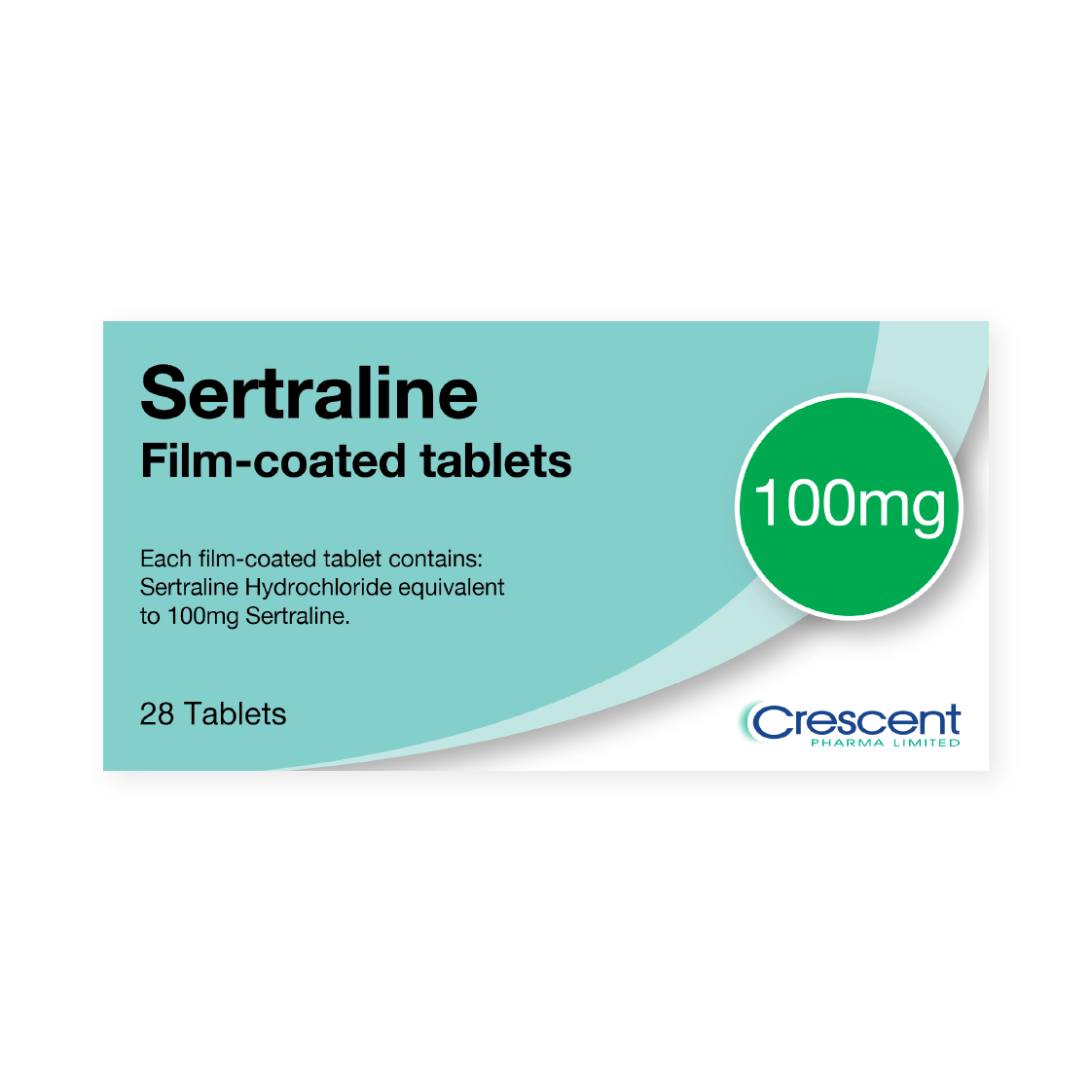

Classification of Sertraline 100mg x 30 Tablets
Sertraline belongs to a class of medications known as Selective Serotonin Reuptake Inhibitors (SSRIs). These medicines are commonly prescribed for a range of mental-health conditions due to their ability to increase the level of serotonin—a natural chemical linked to mood balance—in the brain.
Sertraline is classified as:
- Prescription-only medicine (POM) in the UK
- SSRI antidepressant
- First-line therapy for depression, anxiety, panic disorder, PTSD, and OCD
- Long-term management medication rather than an immediate-relief treatment
This classification ensures that Sertraline is used safely, appropriately, and under the guidance of a qualified healthcare professional.
What is Sertraline 100mg x 30 Tablets?
Sertraline 100mg tablets contain the active ingredient Sertraline hydrochloride, a potent and highly researched SSRI antidepressant. The 100mg strength is typically used for ongoing management of conditions once a patient has stabilised on a lower dose such as 25mg or 50mg.
Key features of Sertraline 100mg include:
- Film-coated tablets for easy swallowing
- Designed for once-daily dosing
- Helps regulate chemical imbalances associated with mood disorders
- Suitable for long-term treatment when prescribed
- Usually provided in blister packs of 30 tablets—representing a 1-month course
This dosage is often part of a stepped treatment plan tailored individually by a GP or mental-health specialist.
Recommended Dosage for Sertraline 100mg x 30 Tablets
Dosage varies depending on the medical condition and patient response. Do not adjust your dose without the approval of a healthcare professional.
Typical UK-prescribed doses include:
- Depression & OCD: Usually starting at 50mg daily, increasing to 100mg if required
- Panic Disorder, PTSD, Social Anxiety: Initial dose often 25mg, rising gradually
- Maximum daily dose: Usually 200mg, under medical supervision only
General guidance:
- Take one 100mg tablet daily, preferably at the same time each day
- Can be taken with or without food
- Swallow whole with water
- Do not abruptly stop taking Sertraline—dose reductions must be gradual
Your prescriber determines the ideal dose depending on symptom severity and individual tolerance.
How Does Sertraline 100mg x 30 Tablets Work?
Sertraline works by increasing serotonin availability in the brain. Serotonin influences mood, emotional stability, behaviour, and mental well-being.
Here is how Sertraline functions in the body:
- Blocks the reuptake of serotonin in nerve cells
- Raises serotonin levels, improving mood regulation
- Stabilises communication between neurons
- Gradually reduces symptoms of depression and anxiety
- Supports long-term emotional balance
Because it works gradually, most people begin noticing improvements within 2–6 weeks of consistent use.
Benefits of Taking Sertraline 100mg x 30 Tablets
Sertraline provides a wide range of mental-health benefits when taken correctly under medical supervision.
Key benefits include:
- Improved mood stability
- Reduced feelings of anxiety and panic
- Better emotional control and resilience
- Enhanced motivation and daily functioning
- Relief from obsessive thoughts or compulsive behaviours
- Improved sleep patterns (in some individuals)
- Long-term symptom management with consistent dosing
Many patients find Sertraline helps them regain a sense of normality, allowing them to engage more confidently in daily activities, work, and relationships.
When Should You Take Sertraline 100mg x 30 Tablets?
Your clinician will provide personalised instructions, but general guidance includes:
- Once per day, at the same time each day
- Morning dosing is often preferred to minimise sleep disturbances
- Take the tablet with a glass of water
- Can be consumed with food if stomach upset occurs
Situations where Sertraline is commonly prescribed include:
- Persistent feelings of sadness or hopelessness
- Generalised anxiety or excessive worrying
- Panic attacks or recurrent panic symptoms
- Obsessive thoughts or compulsive rituals
- Trauma-related stress symptoms
If you miss a dose, take it as soon as remembered—but never double the dose.
When Should You Not Take Sertraline 100mg x 30 Tablets?
Sertraline is not suitable for everyone. Avoid use and consult a GP or pharmacist if:
- You are allergic to Sertraline or any tablet ingredients
- You are taking or have recently taken MAOI antidepressants
- You have severe liver disease
- You are pregnant or breastfeeding, unless your doctor advises otherwise
- You are taking medications that interact with serotonin levels
- You have a history of serotonin syndrome
- You experience uncontrolled epilepsy
Sertraline must always be assessed on a case-by-case basis by a qualified professional.
Mechanism of Sertraline 100mg x 30 Tablets
Sertraline’s mechanism is rooted in neurochemical modulation.
It works through:
- Selective inhibition of serotonin reuptake
- Increased serotonin concentration in synaptic space
- Enhanced mood regulation pathways in the brain
- Minimal impact on other neurotransmitters, making it safer than older antidepressants
- Supporting long-term neuroadaptive changes that improve mood and emotional control
This targeted mechanism is why Sertraline is widely used and considered a first-line antidepressant in the UK.
Uses of Sertraline 100mg x 30 Tablets
Doctors prescribe Sertraline for several mental-health conditions:
Primary uses:
- Major depressive disorder
- Generalised anxiety disorder
- Social anxiety disorder
- Panic disorder
- Post-traumatic stress disorder (PTSD)
- Obsessive-compulsive disorder (OCD)
Additional off-label uses (based on clinical judgement):
- Premenstrual dysphoric disorder (PMDD)
- Certain sleep disturbances associated with anxiety
- Mood instability related to chronic stress
Always use Sertraline strictly for conditions diagnosed by a healthcare professional.
Warnings and Precautions for Sertraline 100mg x 30 Tablets
Before using Sertraline, keep the following precautions in mind:
Speak to your healthcare provider if you:
- Have liver problems
- Have diabetes
- Have epilepsy or a history of seizures
- Are taking blood thinners
- Have heart rhythm problems
- Are using herbal supplements such as St John’s Wort
- Experience suicidal thoughts—seek immediate help
Important precautions:
- This medicine may take several weeks to show benefits
- Alcohol may intensify side effects
- Do not operate machinery if feeling dizzy or drowsy
- Do not stop taking Sertraline suddenly—withdrawal symptoms can occur
Monitoring by a GP ensures optimal safety and effectiveness.
Side Effects of Sertraline 100mg x 30 Tablets
Like all medications, Sertraline may cause side effects, although not everyone experiences them.
Common side effects:
- Nausea
- Dry mouth
- Headaches
- Dizziness
- Insomnia or drowsiness
- Diarrhoea
- Increased sweating
Less common side effects:
- Blurred vision
- Loss of appetite
- Reduced libido
- Weight changes
Seek urgent medical help if you experience:
- Severe allergic reactions
- Signs of serotonin syndrome (fever, agitation, tremor)
- Suicidal or disturbing thoughts
- Unusual bleeding or bruising
Report any persistent or severe side effects to your GP or pharmacist immediately.
Storage for Sertraline 100mg x 30 Tablets
Proper storage ensures medication effectiveness and safety.
- Keep tablets in their original packaging
- Store below 25°C
- Protect from moisture and direct sunlight
- Keep out of reach and sight of children
- Do not use after the expiry date on the packaging
Dispose of unused medication through a local pharmacy scheme.
Where to Buy Sertraline 100mg x 30 Tablets?
In the UK, Sertraline 100mg is a prescription-only medicine.
This means you can only purchase it legally from:
Authorised sources such as:
- NHS prescriptions
- Private UK-registered online pharmacies
- Licensed high-street pharmacies
- GP-approved telehealth services
Any website offering Sertraline without requiring a prescription should be avoided for your safety.
At Buying Steroids UK, we prioritise patient education, safe usage, and legal compliance, ensuring you understand how to access medications through legitimate and approved channels.
Frequently Asked Questions (FAQ)
1. How long does Sertraline take to work?
Most users notice improvements after 2–6 weeks, with full benefits often appearing by 8–12 weeks.
2. Can I drink alcohol while taking Sertraline?
Alcohol may increase side effects like dizziness and drowsiness. Many clinicians recommend avoiding or limiting alcohol.
3. Is Sertraline addictive?
No. Sertraline is not classed as addictive, but stopping abruptly may cause withdrawal symptoms.
4. Can I take Sertraline long-term?
Yes—many people take Sertraline safely for months or years under medical supervision.
5. What if Sertraline doesn’t work for me?
Your GP may adjust your dose, switch medications, or suggest complementary treatments.
6. Can I take Sertraline during pregnancy?
Only if your doctor believes the benefits outweigh the risks. Always seek professional advice.
7. Should I take it in the morning or at night?
Morning is usually preferred, but if it causes drowsiness, night-time may suit better.
8. Can Sertraline help with anxiety?
Yes—Sertraline is widely prescribed for general anxiety, panic disorder, and social anxiety.
Be the first to review “Sertraline 100mg x 30 tablets”
Related products
Pain Meds/Anxiety Meds

Pain Meds/Anxiety Meds


Pain Meds/Anxiety Meds

Pain Meds/Anxiety Meds

Pain Meds/Anxiety Meds

Bulk Buy product deals
Reviews
There are no reviews yet.